
Beowulf: Part One
Monstrous Mother or Caring Warrior?

Dear Noble Readers,
This week, I will be discussing the first half of Beowulf, translated by Seamus Heaney, the Second Norton Critical Edition. While the story of Beowulf defeating Grendel is an epic hero narrative driven by bravery, honor, and reputation, I prefer to focus on Grendel’s mother.
When readers are first introduced to Grendel’s mother, she is described as:
“Grendel’s mother, monstrous hell-bride, brooded on her wrongs. She had been forced down into fearful waters, the cold depth, after Cain had killed his father’s son, felled his own brother with a sword” (1258- 1263).
From the very beginning, we are supposed to believe that Grendel’s mother is a monster based on her description and also due to her living situation. According to the story, she lives somewhere deep under a lake, far away from civilization. However, we should be quick to notice that she was “forced” to live in those fearful waters surrounded by other monsters. Typically, people (or even creatures) mimic who they surround themselves with… So was her “monstrous” behavior a character trait she was born with, or was it forced upon her due to her situation?
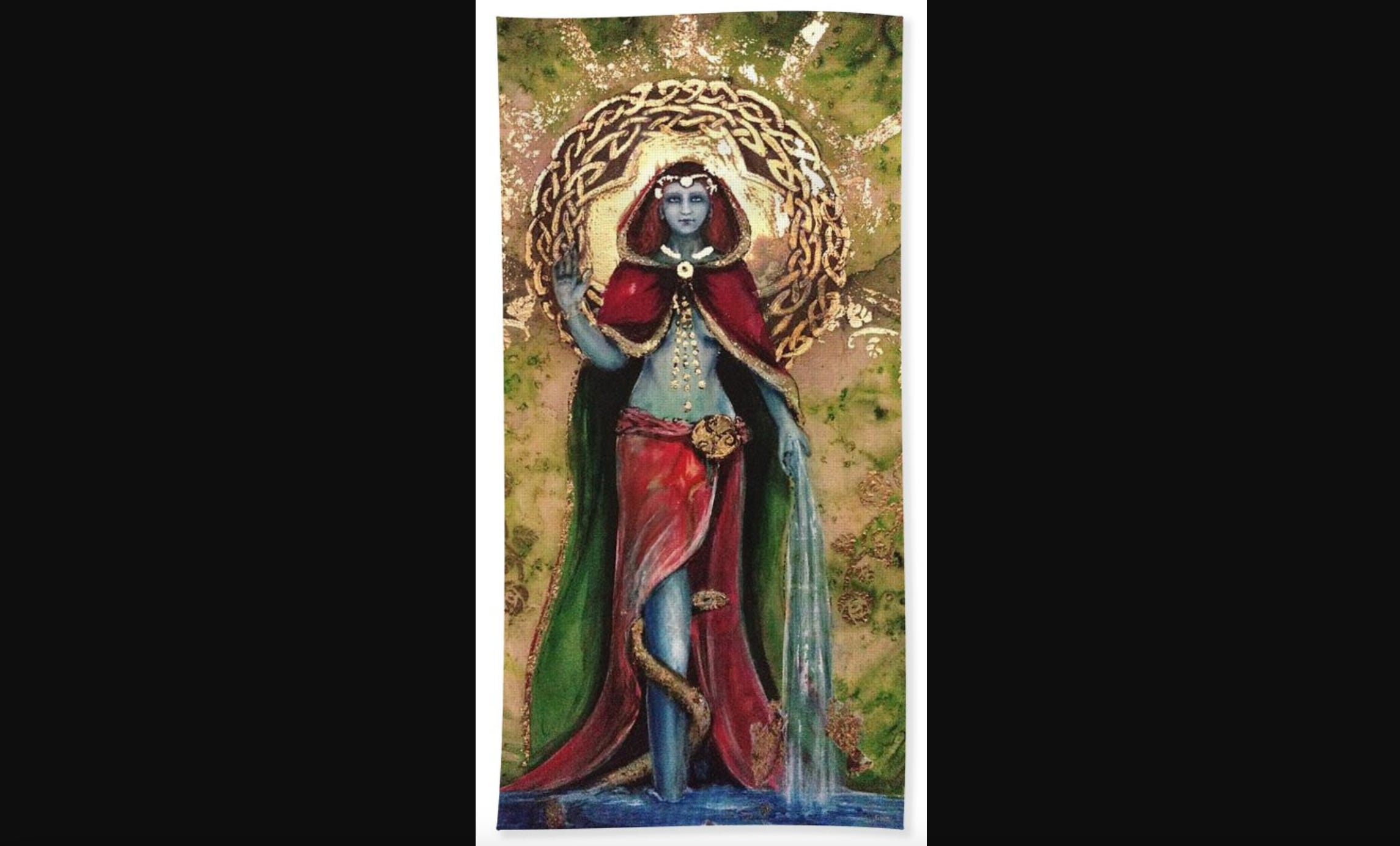
Furthermore, it is unnerving that Grendel’s mother is never given a name; not only does this diminish her identity completely, but it personifies her into this picturesque monster! My point being, of course, that she is illustrated as a monster when that was the only way she was allowed to be perceived by the anonymous author of the epic poem.
“But now his mother had sallied forth on a savage journey, grief-racked and ravenous, desperate for revenge. She came to Heorot. There, inside the hall, Danes lay asleep, earls who would soon endure a great reversal, once Grendel’s mother attacked and entered” (1276-1282).
When Grendel’s mother is on her quest to avenge her son’s death, her mission is characterized as a desperate attempt to seek revenge. In this quotation, the narrative shifts to a mother figure seeking retribution for her son, rather than a monster void of any emotion. Through a lens of Monster theory, as outlined by the scholar Jeffrey Jerome Cohen, a mother monster, such as Grendel’s mother, might represent a fear that is masked as desire. This desire could be for a mother’s love as intense as hers! One who seeks revenge and is willing to die for her child. Desire and attachment to a mother are best explained through the French psychoanalyst Lacan (see further reading for more details).
Overall, why does every critic and the epic poem itself mark Grendel’s mother as a “water-witch” monster when she is just a mother wanting to even the playing field for her son? Is she misunderstood or actually a monster? Or are all monsters misunderstood? What do you think about this argument? I would love your input in the comments!
Farewell to thee,
Anna
Further Reading:
Acker, Paul. “Horror and the Maternal in ‘Beowulf.’” PMLA, vol. 121, no. 3, 2006, pp. 702–16. JSTOR, http://www.jstor.org/stable/25486349.
Nitzsche, Jane C. “The Structural Unity of Beowulf: The Problem of Grendel’s Mother.” Texas Studies in Literature and Language, vol. 22, no. 3, 1980, pp. 287–303. JSTOR, http://www.jstor.org/stable/40754612.
I really liked how you questioned the idea of Grendel’s mother as purely a monster and instead framed her as a grieving mother shaped by her circumstances. Your point about her being unnamed was especially strong, since it shows how the text strips her of identity and makes it easier to label her as “other.” Bringing in monster theory also works well here, because it highlights how fear and sympathy can exist at the same time. Overall, your post makes a compelling case for reading her as more complex than the poem initially suggests.
Hey Anna! I was very intrigued by your more maternal take on Grendel's mother. I have spent some time exploring the nuances of Grendel's character as he is depicted that may point to the presence of some sort of physical or cognitive disability, but had not given much thought to his mother or her motivations yet. You do an excellent job of humanizing her grief, something I feel she is distinctly deprived of in verse. To me, neither she nor her son read as truly monstrous, but rather as beings forced to navigate extreme isolation and the challenges of survival outside of society. In this era especially, survival was best achieved in numbers. What those within society perceive as monstrous might be the desperate manifestation of what isolated survival necessitates.